🧠 Brain Tumor: The Silent Threat You Should Never Ignore!
Introduction: When Your Brain Sends a Warning…
Most people ignore headaches.
Most people brush off fatigue, dizziness, or a moment of forgetfulness. But sometimes… your brain is trying to tell you something serious.
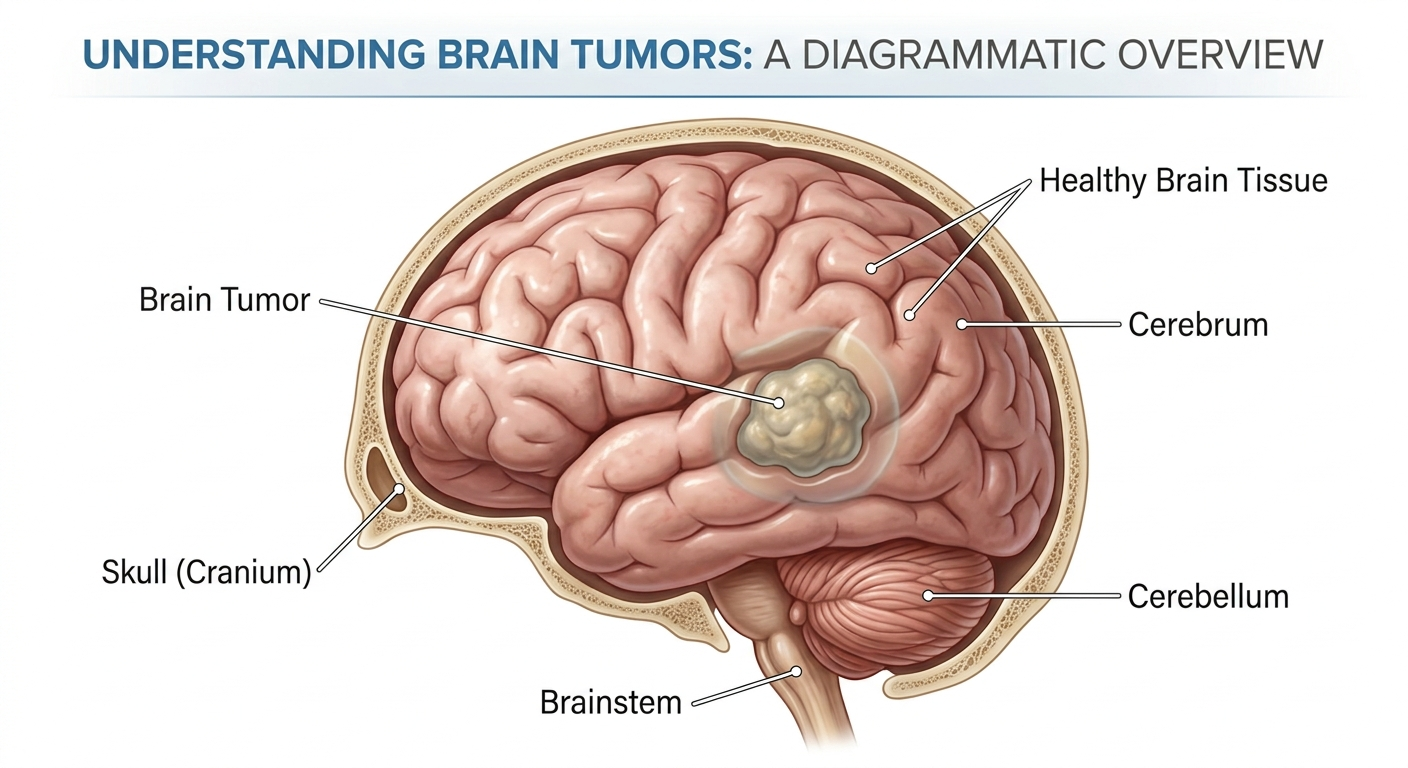
A brain tumor is an abnormal growth of cells inside the brain or its coverings. It can be benign (non-cancerous) or malignant (cancerous). But here’s the truth most people don’t realize:
‘Even a benign tumor can be life-threatening because the brain sits inside a rigid skull‘.
There is no space for expansion. Even a small growth can disturb vital brain functions.
🚨 Early Warning Signs of a Brain Tumor
1. Headache That Feels Different
- Persistent, worsening over time
- Often worse in the early morning
- Not responding to usual medication
‘This is not your typical migraine’.
2. Vomiting Without a Reason
- Sudden vomiting, especially in the morning
- Not related to food or stomach issues
3. First-Time Seizure (Fits)
- Sudden jerking movements
- Loss of consciousness
👉 In adults, a first seizure is a red flag until proven otherwise.
4. Vision Problems
- Blurred or double vision
- Loss of vision on one side
5. Weakness or Numbness
- Usually on one side of the body
- Gradually worsening
6. Personality and Behavior Changes
- Irritability
- Memory problems
- Difficulty focusing
7. Loss of Balance
- Frequent falls
- Difficulty walking straight
🧠 Why Do These Symptoms Occur?
A tumor affects the brain in two major ways:
- Pressure effect (Raised intracranial pressure)
- Direct damage to specific brain areas
For example:
- Tumor in motor area → weakness
- Tumor in visual pathways → vision loss
- Tumor in cerebellum → imbalance
🩺 How Are Brain Tumors Diagnosed?
- MRI Brain → Gold standard
- CT scan (in emergencies)
- Sometimes biopsy for confirmation
👉 Early imaging can be life-saving.
💉 Treatment: What Are Your Options?
Treatment depends on the type, size, location, and patient condition.
1. Surgery
- First-line treatment in many tumors
- Goal: remove as much tumor as safely possible
- Often gives immediate relief from pressure symptoms
2. Radiation Therapy
- Uses high-energy beams to destroy tumor cells
- Used after surgery or when surgery is not possible
3. Chemotherapy
- Drugs that kill cancer cells
- Common in aggressive tumors like gliomas
4. Targeted / Advanced Therapies
- Precision medicine based on tumor biology
- Increasing role in modern neuro-oncology
📊 What About the Outcome?
Here’s the honest truth:
- Benign tumors (like meningioma)
→ Excellent outcomes with surgery - Low-grade tumors
→ Slow-growing, long survival - High-grade tumors (like glioblastoma)
→ Aggressive, require combined treatment
👉 Outcome depends heavily on early diagnosis and treatment.
⚠️ When Should You Seek Immediate Help?
Do not delay if you notice:
- First-time seizure
- Progressive weakness
- Persistent headache with vomiting
- Vision changes
🎯 Final Takeaway
Not every headache is a brain tumor.
But every persistent, unexplained neurological symptom deserves attention.
Your brain rarely complains…
But when it does, listen carefully.
If you want, I can also convert this into:
- SEO-optimized version for your website
- High-converting patient landing page
- Or a viral Instagram carousel/reel script from this blog
Just tell me 👍